Ceramics is an art form in which you make pots, dishes, sculptures and other appliances out of nonmetallic materials, such as sand, (which can be made into glass) clay, (which comes from the earth on the ground.) and other crystalline materials. (composed of mostly rocks and crystals.) Ceramics is one of the oldest art forms ever created by humans, with the oldest pieces of ceramics being approximately over 27,000 years old, originating from Gravettian culture. (During the early years of man.)
Here are some examples of Gravettian ceramic sculptures.
As you can see, man kind come a really long way over the last centuries, because within each generation, ceramics had been developing as a legitimate art form as we've been seeing more and more very well crafted sculptures and pottery dishes being made time and time again. Here are a lot more good examples.
Each generation has made tremendously good use use creativity to create some of these extraordinarily designed historical masterpieces, ranging from the works of the Ancient Egyptians, to the Ancient Greeks, people of the Middle Ages and so on and so forth. They all have different styles that show their historical significance and how they made a large impact on human culture. They can either tell very compelling stories, really little stories, or they can all just be simple pictures that can still tell you what it might have been like during the time periods in which they were made, without the need to use paper.
Now here are some of today's ceramics.
While most of the historical ceramics derive from events that happened in the past and the stories that those would be told to be entertained by, these more contemporary ceramics displayed for your viewing purposes, seem to be more derived mostly from nature. Many of today's ceramics can actually come in many different shapes and sizes, and some can still contain pictures of whatever you're interested in. Ceramics are also very profitable as well as there can be people out there that might want to buy specific types of ceramics for decoration.
And now here is my research of a ceramics artist who made a living off of ceramics during her lifetime.
Clarice Cliff (20th January 1899 - 23rd October 1972) was an apprentice potter who became head of the factory artistic department. Cliff worked at A.J. Wilkinson's where she helped the factory designers, John Butler and Fred Ridgway, producing conservative Victorian style wares. She was allowed to decorate defective white pottery and used on glazed enamel colours freehand. She covered imperfections by using simple patterns of triangles and these were marketed as "Bizarre by Clarice Cliff". She was sent to the Royal College of Art in London. On her return she was actually credited for the shapes she designed, she used "moderne" influenced designs, often angular, geometric and many were in the Art Deco style.
These are some of the pictures of Clarice Cliff's work.


Each one of these pots has got an interesting shape. Most of them are rather angular in terms of design and really colourful, because I really do like the simple and retro colours, the use of orange, cerulean, purple, green, yellow, red and pink gives these dishes and pots a sense of vibrance.
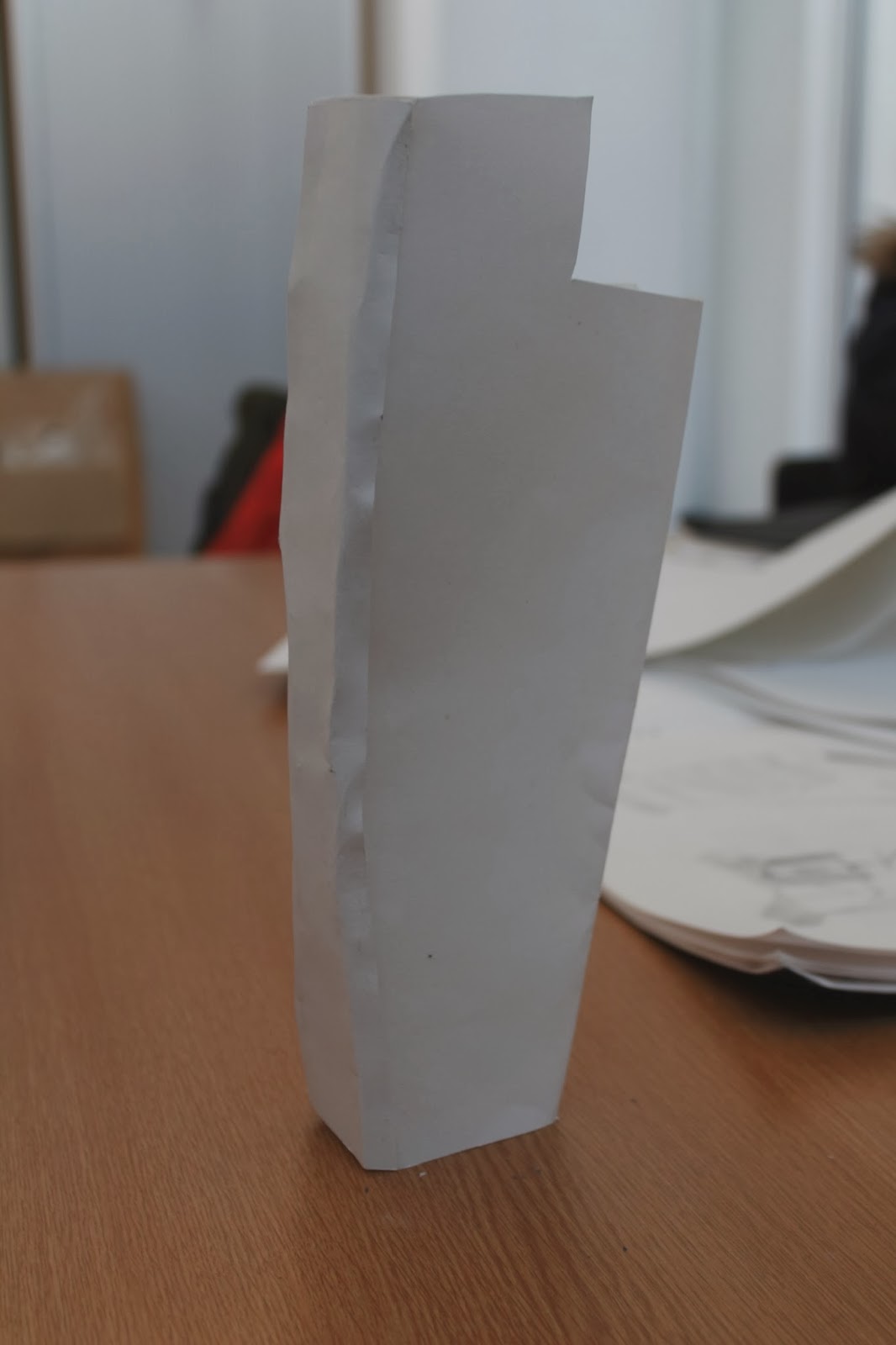
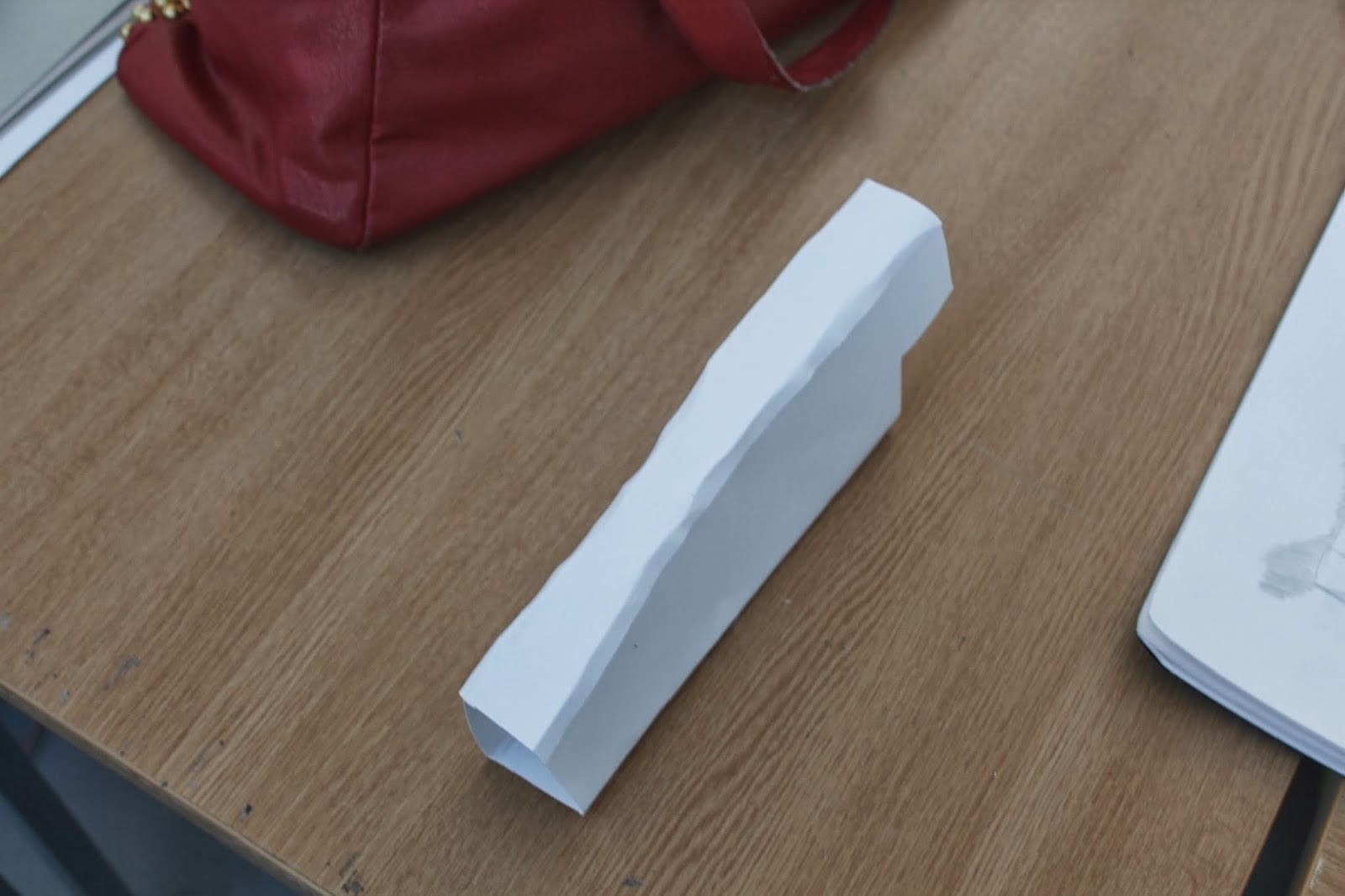
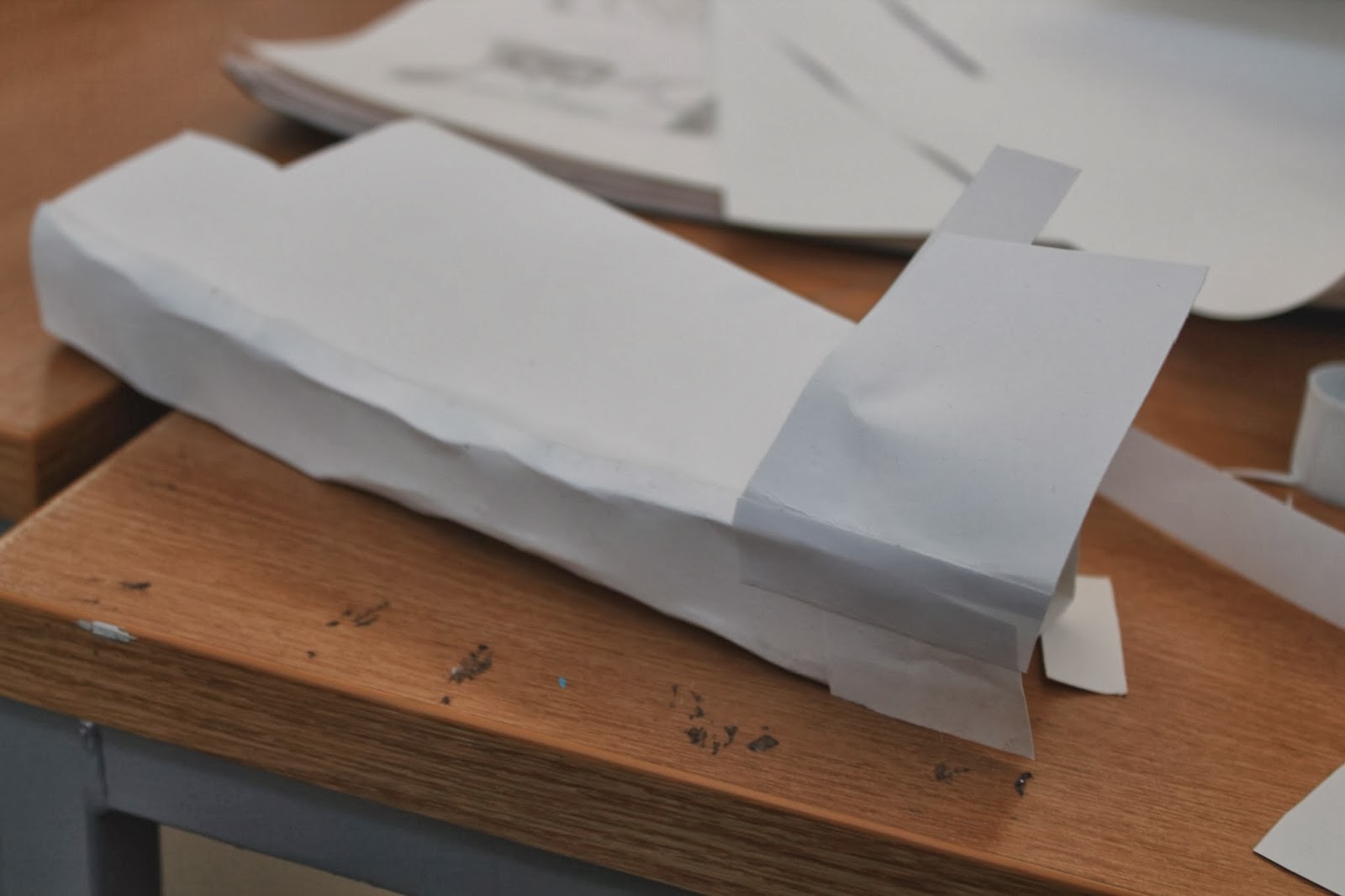
Now here's a model of what I have been trying to make for my ceramics course.
I made these models using simple A3 white paper, I had designed a mini sculpture of my own design, and took six pictures of the sculpture from different angles. However, because my tutor wanted me to make a sculpture from some the drawings that I made in my sketch book, so I made another paper model using my drawings for reference. Obviously I took several pictures from different angles, but I should also note that the sculpture design takes more inspiration from Orlaith Ross' work than Clarice Cliff. I haven't gotten around to making the final sculpture, but at some point this term I will get around to it. By then I will update this post and then I will explain how I made the final sculpture and share my information with you once I've finished.